NASHVILLE, Tenn. – Fourteen times, the Titans drew a penalty flag in Denver. Officials paced off 131 yards for the 13 accepted calls – the most yards against anyone in the NFL in Week One -- and handed the Broncos six first downs.
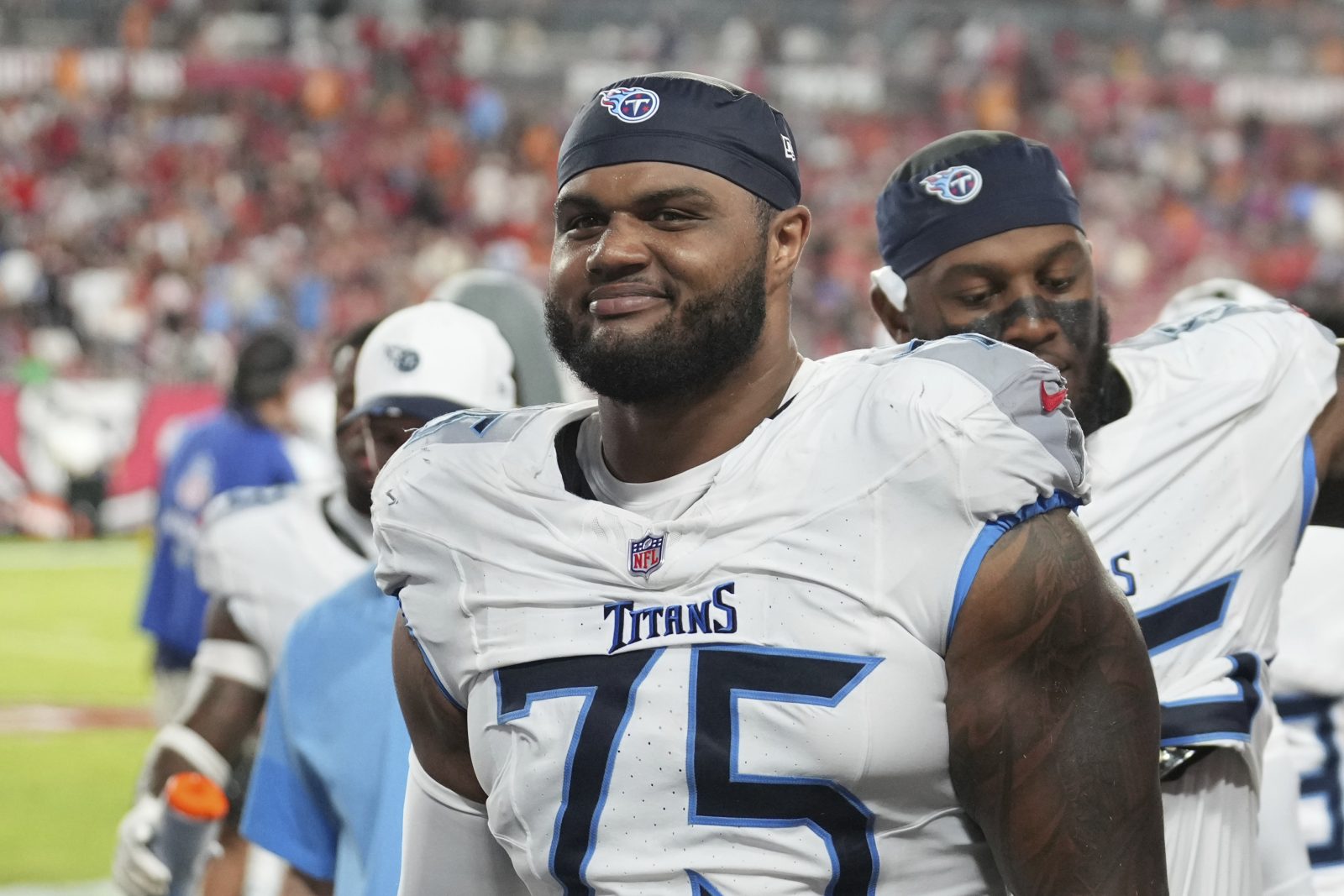
Self-inflicted negatives were an offseason theme in Nashville. But in the Titans' first chance to show refined discipline, they matched last year’s high in penalties and surpassed their worst yardage.
What makes a player commit an infraction?
The easy answer is a failure in technique leads a player to hold, interfere, rough the passer or make illegal contact.
I tend to think overmatched players get desperate and foul to stop really bad things from happening – a sack or a long completion, for example. But in talking to a few smart people around the league, I’m convinced I overrate that.
“Every so often like in the Cowboys-Eagles game when the Dallas guard Tyler Smith just tackles his guy -- he got beat so badly off the snap that he tackled his guy to save Dak (Prescott),” one NFL front office insider said. “Same with a corner, he tackles or grabs the waist when he’s beat, that’s the desperation stuff.”
He said 90 percent of penalties are not in that category, they are technique failures.
So why do players fail in technique?
“There are so many things,” Kevin Zeitler said. “It could be the D-line doing a great move. It could be a lapse for whatever reason, setup, bad timing. You just never know -- there are a million little things. But the goal is, whatever those million little things are, you don’t let them affect you.”
Another front office insider groups penalty offenders into roughly three categories.
1) Undisciplined players who lack technique/fundamentals or emotional stamina during the course of a game.
These players tend to be repeat offenders. They are not dedicated to details, they are not professionals at their craft and they don’t control their emotions well. Often, they display a pattern over their careers.
Insider believes they account for the majority of penalties.
When teams deal with such players before they reach a tipping point, they need to consider if he is being coached well enough on the necessary fundamentals and on controlling his emotions, and if the scheme is putting any strain on him.
It’s early for Jarvis Brownlee, who just played in his 18th game, but he’s been flagged 12 times already. His reaction after three penalties in Denver was poor as he talked about not conforming to fit what officials need to see.
Cleaning up penalties could define what sort of player he will be. If he lands in this category, it will have a big impact on his career. He certainly fits the scheme.
We will see what Dennard Wilson – who said Brownlee’s penalties on opening day were unacceptable -- and Tony Oden do with him and if Brownlee, whose emotions are an important part of his game, can compartmentalize the part related to penalties.
2) Players who are physically overmatched from a size/strength component or lack the necessary athletic traits.
I think this is really more of what I am talking about when I talk about overmatched players fouling to prevent getting beaten.
When players are matched up against players who are simply better, they are going to get beat at a more  frequent rate, and as a counter to that, they are going to be more prone to commit penalties, particularly at the point of attack.
Nik Bonitto overmatched Dan Moore. So he held him. (He was also flagged for being an ineligible man downfield.) Jared Verse is another very good pass rusher who will threaten Moore on Sunday for the Rams.
3) Players who lack an instinctual feel for the game and get beaten at the point of attack.
Sometimes these sorts of players can seem to have it all – they are big, strong, fast and smart. But they simply don’t process movement well enough and revert to grabbing and holding as a result.
When Dillon Radunz had 11 penalties in 16 games and 11 starts in 2023, it felt as if maybe he fit in this category. He did cut it to four penalties in 15 starts in 2024.

Support independent Titans coverage
PaulKuharsky.com is independent Titans coverage supported by readers. Paul has covered this team since 1996 — longer than any active beat reporter.
Full access to every member story, film study, and podcast is $7.50/month or $81/year.