NASHVILLE, Tenn. – Cam Ward has had a rough rookie season. But have you seen the defenses he’s faced? His supporters have a case to make.
Mike Vrabel is the favorite for coach of the year. But the Patriots didn’t really play anybody. His detractors have a case to make.
Every discussion in the NFL now seems to come with an asterisk.
Nothing can just be evaluated on its own terms anymore. Everything is conditional. Every result is filtered through strength of opponent, timing, injuries, motivation, weather and whatever else we decide matters that day.
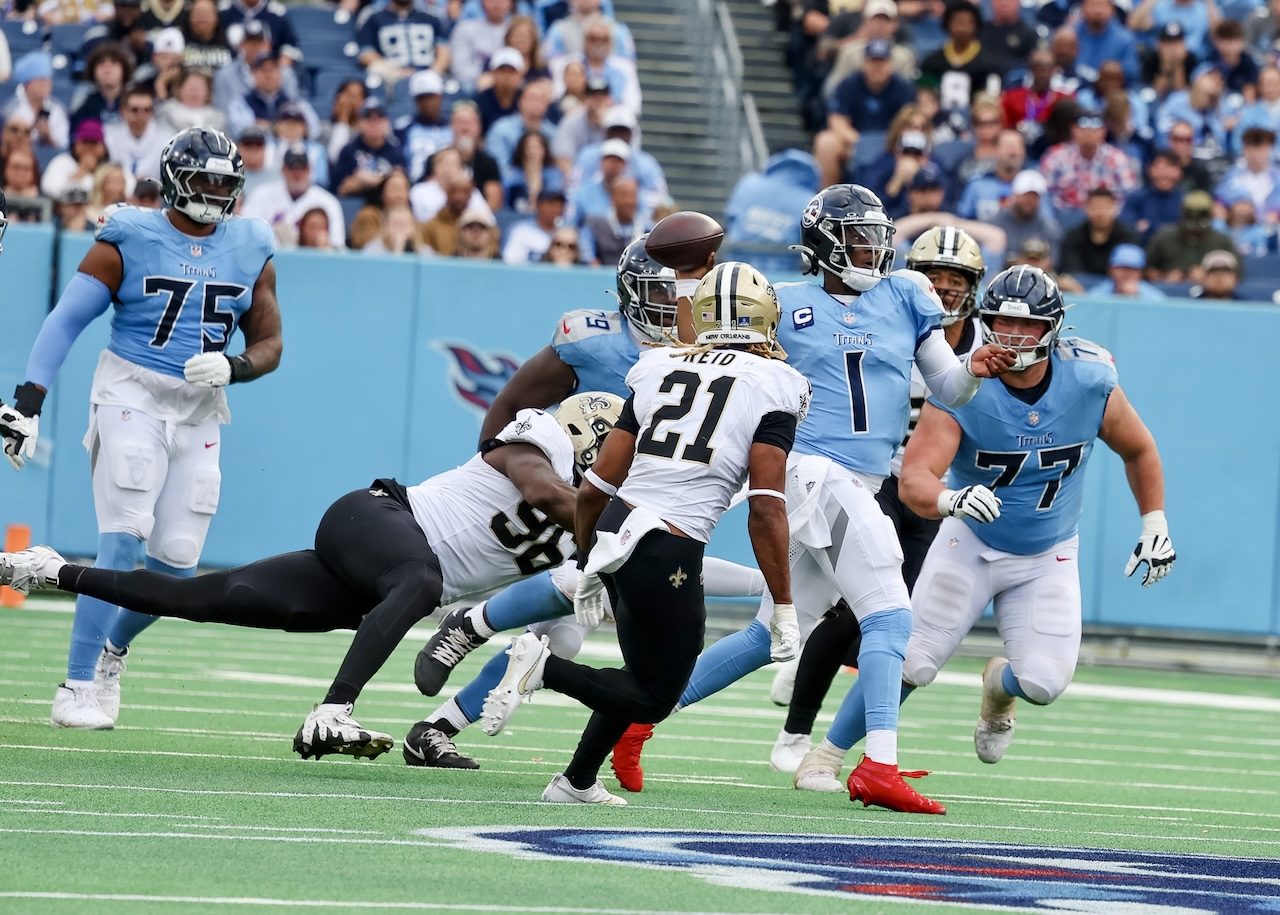
Tyler Shough of the Saints took over Sunday against the Titans and deserves credit for it. He finished 22 of 27 for 333 yards and two touchdowns with a 142.7 passer rating.
Maybe that performance comes with a mention of the Titans playing low-rent players in their secondary. Maybe it comes with a reminder of who wasn’t available. Maybe it comes with both. Context is certainly important.
But it doesn't mean every game is rescored after the fact.
A quarterback having a good day isn’t good enough. Did he do it against a good defense? Because that’s the only way it counts. Did he make fantastic throws under pressure that translate into social media clips? That validates it.
Did you hear there are new tables now? Wins against good teams go in one column. Wins against bad ones go in another. Completions against press coverage with pass pressure are separated from throws against softer looks when protection holds up. Finally, we can see what’s really happening.
Throw to Wide Open WRs and TEs all game = Out Played https://t.co/GQk45jOmkV
— RJ Ellison (Cam Ward’s Body Guard) (@Romellz_) December 30, 2025
Here’s one from a member of this site, in our private Facebook group:
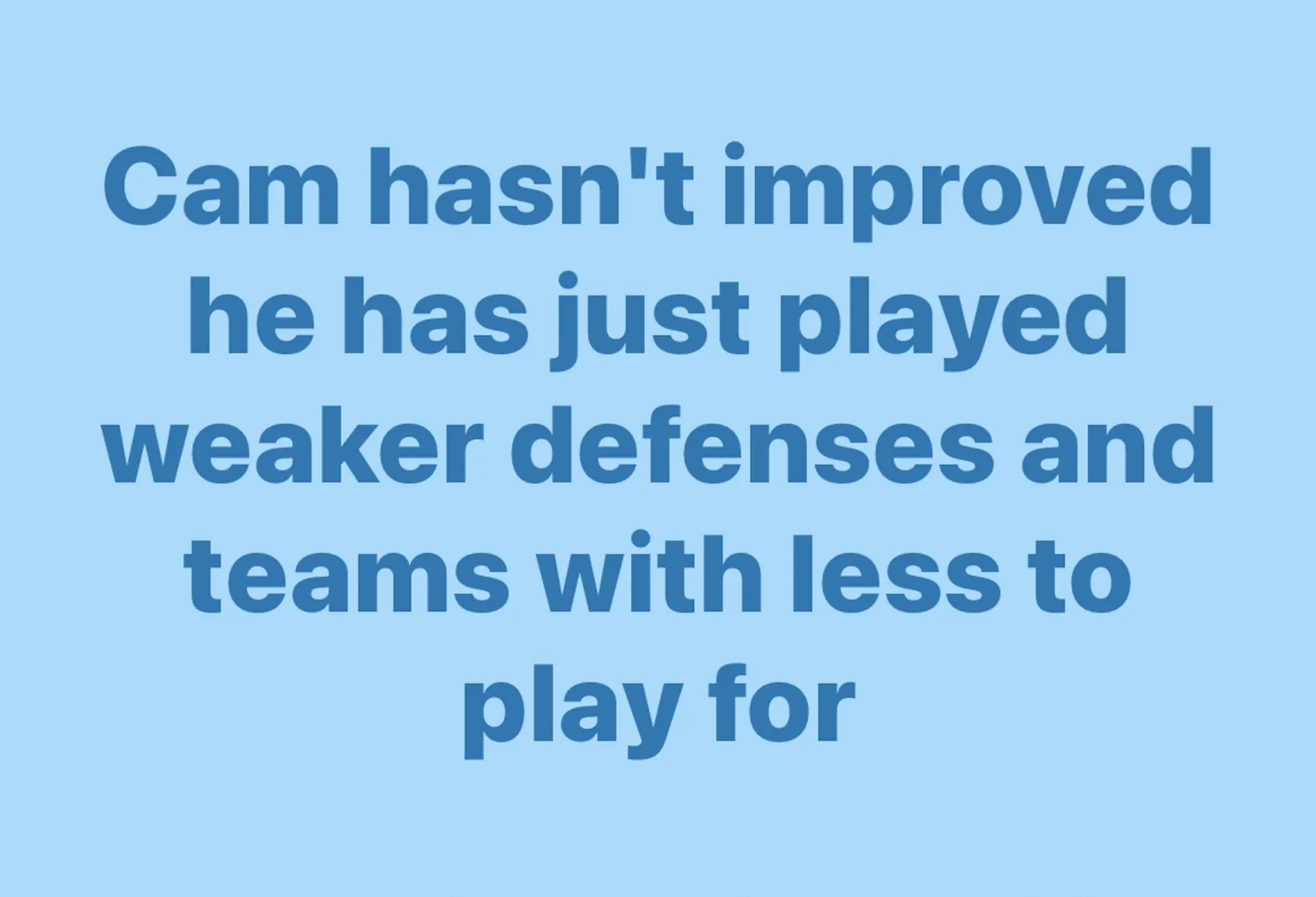
I object. Strenuously.
First, it’s not correct.
Cleveland is third in defensive EPA and second in yards allowed. Kansas City is sixth in scoring defense. The Saints are ninth. San Francisco is 13th. Yes, the Chiefs had just seen a long playoff run end and Patrick Mahomes go down. But the other three weren’t sleepwalking through December.
That was not a four-game vacation.
Second, improvement is allowed to happen no matter who you’re playing. Playing well against a team someone later decides wasn’t good enough still counts as playing better. The Titans don’t need to beat a first-place team for progress to qualify as progress.
Results are results.
And this kind of conversation undoing them is everywhere now.
A performance isn’t evaluated on what happened. It’s regraded once we decide how we feel about the opponent, the circumstances or the stakes. A win needs qualifiers. A loss needs too much context. Eventually, the original result starts to feel secondary.
Context has always mattered. But it’s also becoming a way to avoid acknowledging improvement when it shows up in an inconvenient place. Playing well against a team that doesn’t meet an arbitrary standard doesn’t mean you didn’t play well.
I have Hall of Fame conversations with people who want to downscore great players because of their surroundings. Reggie Wayne was great, but he had Peyton Manning throwing to him. Am I supposed to reduce what Wayne did because of who he played with? Should I elevate the careers of his peers who caught passes from lesser quarterbacks?
That makes no sense.
Circumstances are part of the league. Where you’re drafted. Who your coach is. Who’s  healthy. Who’s on the schedule that week. None of that is within a player’s control.
Then games are played. A team wins. A team loses. Sometimes there is a tie. Stats are recorded.
Those are permanent.
There isn’t a dimmer switch that lets you brighten the things you want to emphasize and darken the things you’d rather dismiss.
Take note of how often it’s happening around you.
And watch how often you’re doing it yourself.

Support independent Titans coverage
PaulKuharsky.com is independent Titans coverage supported by readers. Paul has covered this team since 1996 — longer than any active beat reporter.
Full access to every member story, film study, and podcast is $7.50/month or $81/year.
