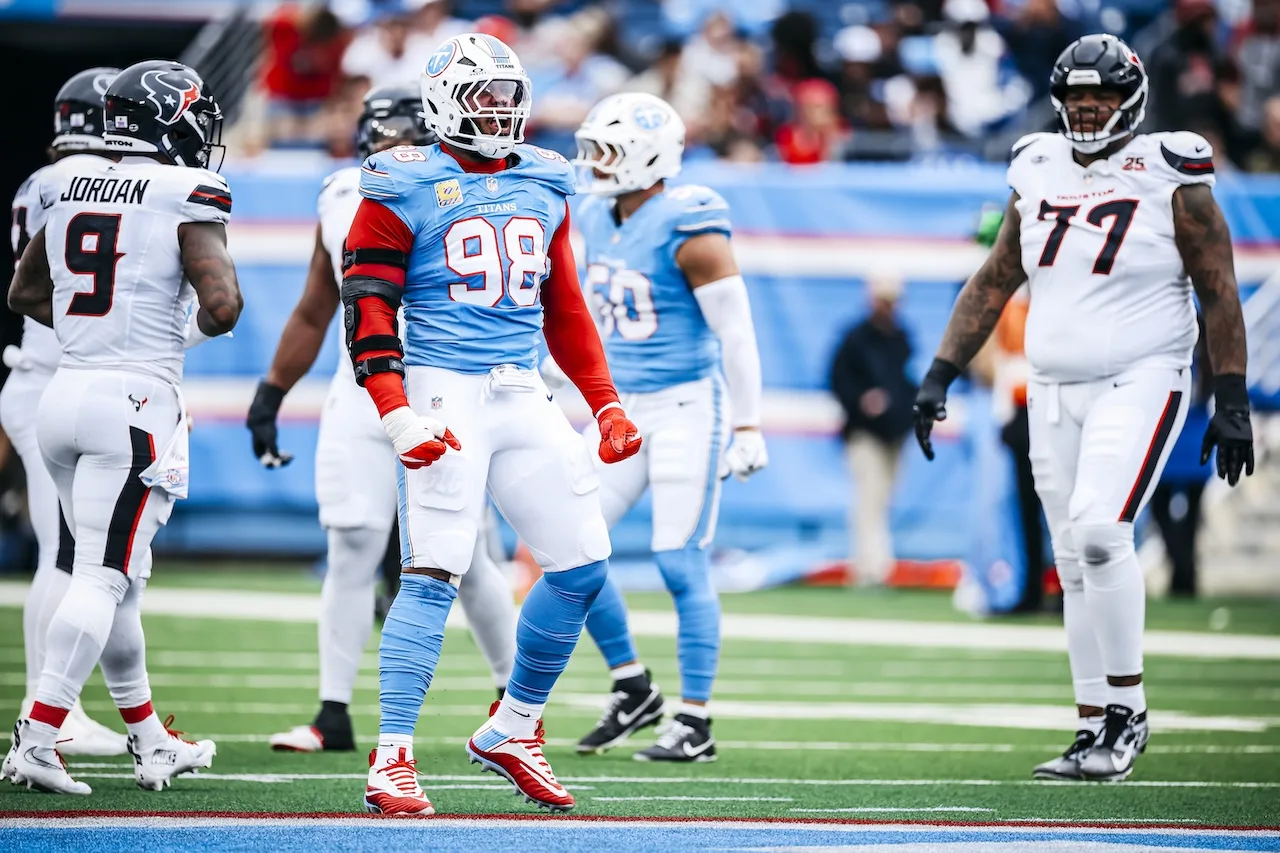
Jeffery Simmons is winning despite constant double teams, but Tennessee's other pass rushers aren't producing, even with quarterbacks holding the ball longer than average.
By MIKE HERNDON, columnist
Robert Saleh provided a great press conference answer last week regarding what he considers the two ways to create a great defense. One option is to have a lockdown secondary that allows you to blitz and get creative with your rush plan. The other, which Saleh prefers, requires a front that can create pressure with four, allowing the defense to commit additional bodies to the back end.
Hands down one of the best exchanges between reporters and an NFL head coach I’ve ever seen, featuring Titans HC Robert Saleh and the local media. What started as a simple question about the complexities of Saleh’s zone defense and why there might be some early growing pains turned into nearly seven minutes of incredible insight. Saleh explains why the system takes time to learn but can eventually produce top-five defenses. He breaks down how players learn to attack offenses by understanding what they’re trying to do to them, rather than simply dropping to a spot and defending grass. He also dives into the evolution of his defensive philosophy, drawing from his experiences around Pete Carroll’s Cover 3/Legion of Boom system, Vic Fangio, Monte Kiffin and others. He discusses the key positions that make the system work, his overall philosophy on defense and so much more. I’ve heard DeMeco Ryans speak glowingly about Robert Saleh, how brilliant he is and how instrumental he was in DeMeco’s development as a coach. But I don’t think I fully appreciated what he meant until watching this. Just an incredibly bright defensive mind. And what makes this especially fascinating from a Texans perspective is that DeMeco is essentially building and running a variation of that same defensive philosophy, with some of his own wrinkles. It’s particularly relevant right now given Houston’s struggles with defensive communication and executing its coverage rules. Saleh provides some excellent perspective on why these systems can be so difficult to master, how players eventually develop a deeper understanding of what offenses are attacking, and why that understanding allows them to play faster and more aggressively. Must watch.
— Houston Stressans (@TexansCommenter) October 10, 2026
While the Titans invested in both areas during the offseason, the thought heading into the season was that Tennessee’s front four would be the best unit on the team and something that the team could build an identity around as the young offense grew.