The plays beating the Titans will eventually look easy, Robert Saleh says. Getting his defenders to that point requires mastering a zone structure built on recognition, communication and shifting responsibilities.
By PAUL KUHARSKY
NASHVILLE, Tenn. – Robert Saleh’s Monday explanation about the complexities on the Titans zone defense begged for follow-up.
He said defensive backs had to get used to what they are seeing in the team’s zone structure, that by Week 10 they’ll laugh when teams run some of the stuff they’ve had success with recently and that they are some of the easiest plays in football; the Titans just don’t understand it yet.
At his Wednesday press session, I was eager to learn more about what makes the coverage different and why something Saleh considers easy takes time to master. Several of us stacked up questions that resulted in a deep Q&A where he put significantly more meat on the bone.
The most clarifying thing was that the Titans aren’t simply playing traditional spot-drop zone, where defenders get to an area, read the quarterback and react to what develops in front of them.
🔓 UNLOCKED: This story is free for all readers, made possible by PaulKuharsky.com members.
Saleh’s version requires defenders to pass routes and responsibilities between each other and adjust their zones based on formations and movement by the offense.
“We play more of a zone structure where we pass things off, push people off in coverage, and so they're getting used to it,” Saleh said. “Because people are so used to ‘I got this guy here for the down’ versus ‘I've got to be alert for possible shove calls, I’ve got to be alert for certain formations.’ …
"And there are certain things that as they continue to get reps, they'll start seeing that all these teams kind of attack us the exact same way, and they'll start recognizing things before they happen.”
A shove call shifts a coverage zone horizontally, typically in reaction to motion.
Why Saleh’s Zone Defense Takes Time
Tony Adams, who played in Saleh’s defense with the Jets, knows both sides of the learning curve.
“It's really specific, everybody’s got responsibilities, and it's really particular,” he said. “It's not like we’re running anything more complicated, but it's different. Like certain details, you got to be on it. It takes a little time to get it, and I think these guys have been picking it up at a tremendous level, and it's just going to continue to get better. Because it just takes time.
“It's more eyes on the quarterback. But at the same time, what the offense does affects you in a certain way. So you got to be really tuned in to what they're doing and knowing what you're supposed to do.”
How Saleh Distributes Coverage Responsibilities
The complexity isn’t distributed evenly across the defense. Saleh said at the owners’ meetings in March that his system is designed to “transfer stress from one position to the next” depending on the call.
For the linebackers, the coverage demands are more vision-based. Cedric Gray described the change during the spring as moving away from matching routes and toward spot drops, reading what develops and breaking on the ball.
That puts a premium on an effective four-man pass rush and allows the linebackers to play with their eyes on the offense rather than routinely carrying receivers through routes.
Titans Defensive Front Finally Showed What It Was Supposed to Be
Saleh points to his defenses in San Francisco and New York as evidence that the learning curve eventually produces results.
Why Saleh’s Defense Limits Explosive Plays
The coach takes particular pride in his defense’s ability to limit explosive plays.
So far, the Titans haven't met that standard.
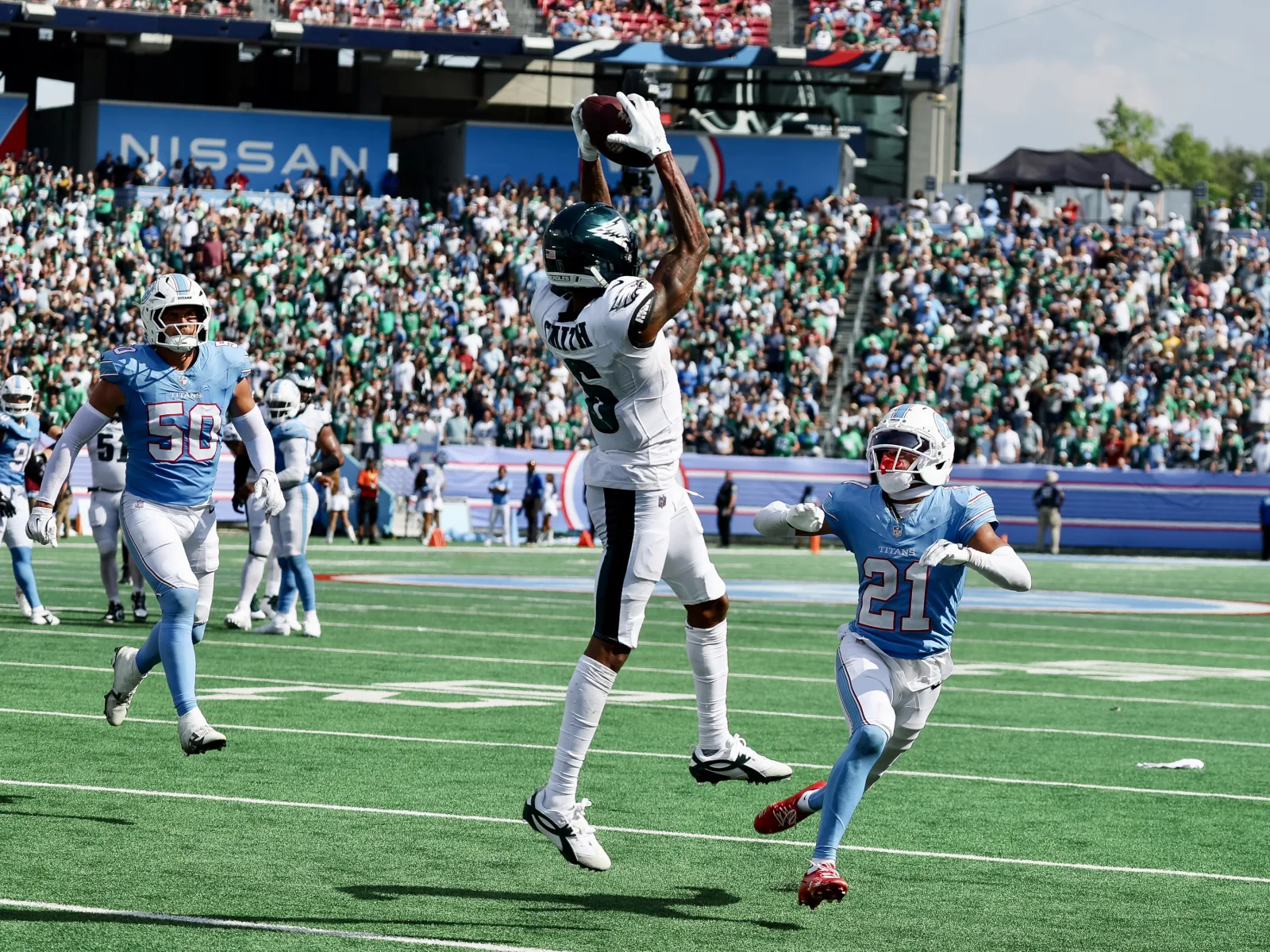
Right now, Tennessee is giving up big pass plays on 11.61 percent of opponents' attempts, which ranks 26th in the NFL. The Eagles' Devonta Smith caught 10 passes for 117 yards and a score while Zay Flowers of the Ravens caught eight passes for 118 yards and a touchdown.
During his term as head coach of the Jets from 2022 into 2024, they allowed explosive pass plays on 7.55 percent of attempts, the second-lowest rate in the NFL, per Sumer Sports.
In 2025, when he was the 49ers defensive coordinator for a second time, San Francisco was eighth-lowest.
Getting there, Saleh said, requires progressing beyond simply knowing the scheme to recognizing what an offense is trying to do without having to think through every responsibility.
From Knowing the Scheme to Seeing the Offense
“It's like a 501-level coaching,” Saleh said. “I think it's very easy to teach scheme. We can teach every scheme in the world, but the really hard coaching is ... get them more focused on what's happening to them. When their eyes are completely focused on the offense, and they know exactly what's happening to them on a play-by-play basis.
“I think that's when the players are their most powerful selves. ... You maximize it by allowing them the freedom to not think about the scheme ... to just completely focus on the offense and what's happening.  And when they do that, they find an extra step that other people can't find because they're so locked with the scheme.”
Saleh does have veterans who should be further along the learning curve. Jermaine Johnson, John Franklin-Myers and Solomon Thomas played for him before, while Adams is the link to his past in the secondary.
Adams has no doubt things will click in.
“If you just look at the history of the defense, you go back to us in New York, go back to them in San Fran, and you see the same pattern,” he said. “History tends to repeat itself. Most definitely.

Support independent Titans coverage
PaulKuharsky.com is independent Titans coverage supported by readers. Paul has covered this team since 1996 — longer than any active beat reporter.
Full access to every member story, film study, and podcast is $7.50/month or $81/year.